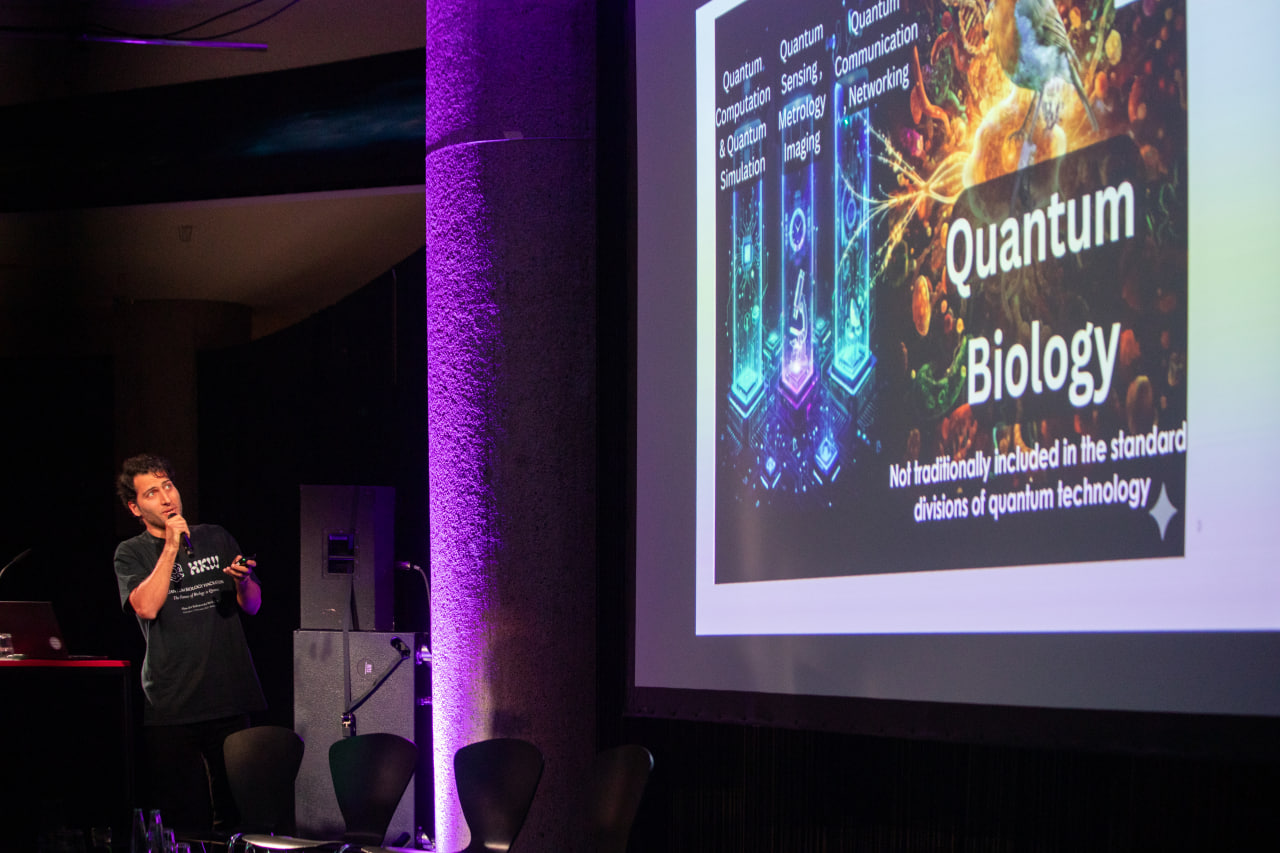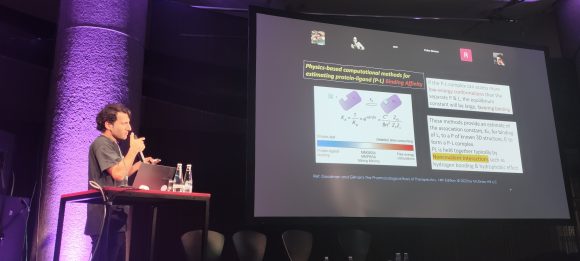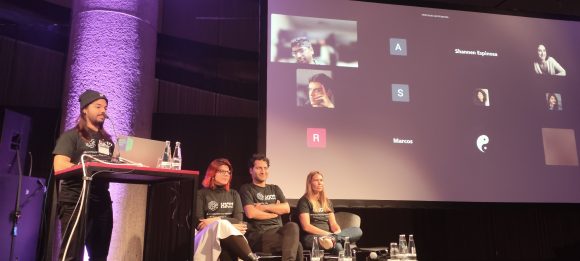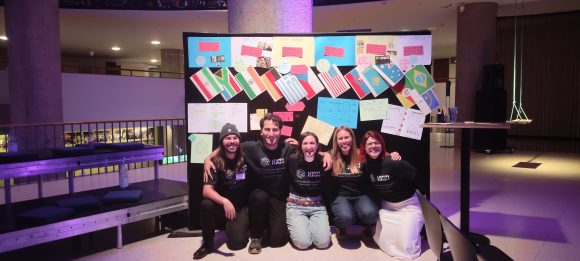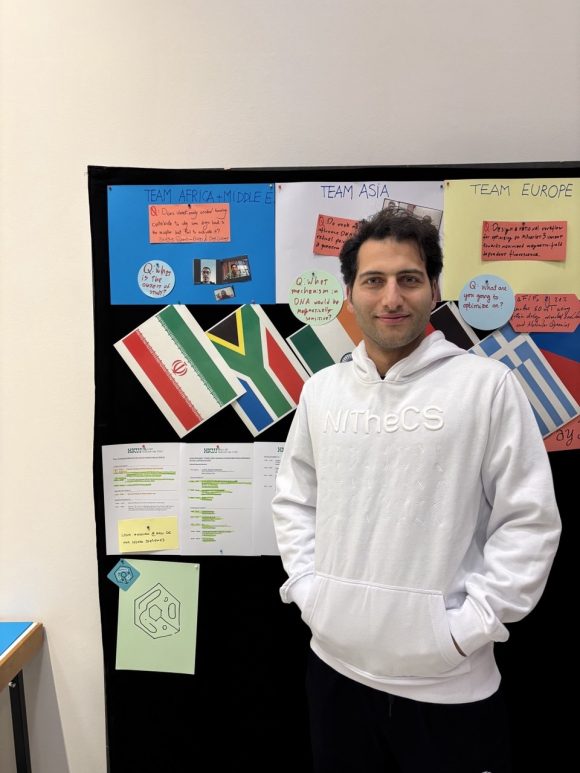
From 31 October to 2 November 2025, Quantum@SUN researcher Abbas (Omid) Hassasfar represented the Africa–Middle East region as a team leader at the first Quantum Biology Hackathon, hosted at the Haus der Kulturen der Welt (HKW) in Berlin, Germany. The event was co hosted by HKW, with the support of Dr Sara Morais dos Santos Bruss, and the Quantum Biology Institute (QBI). The organisation was led by Clarice Aiello and the QBI team, together with Pedro Alvarez from the University of Oldenburg.
The hackathon formed part of HKW’s wider Fertile Void 2025 programme, which brings together artistic, scientific, and cultural perspectives to explore emerging ideas at the intersection of biology, physics, chemistry and society. The gathering brought together six interdisciplinary teams from six regions of the world, each working on frontier problems in quantum biology through rapid collaboration and exploratory computation.
Programme Overview
The first two days of the event, 31 October and 1 November, were dedicated to concept development and collaborative problem solving. Teams worked intensively on refining hypotheses, framing research questions, and developing preliminary models. These sessions created a dynamic environment for cross-disciplinary exchange and rapid idea generation.
The final day, 2 November, opened with a 30-minute keynote by Clarice Aiello, who provided context on how quantum effects may influence biological function and why collaborative, time bounded formats such as hackathons can accelerate discovery. She emphasised the need to integrate theoretical, computational, and experimental approaches and highlighted the importance of building an international community around quantum biology.
After the keynote, each team delivered a 15 minute presentation summarising their findings from the previous two days, followed by a panel discussion involving the organisers and team leaders. Topics ranged from open theoretical challenges to emerging possibilities for applications in biomedical and sensing technologies.
Team Projects
Africa and the Middle East
Team Leader: Abbas (Omid) Hassasfar, Stellenbosch University, South Africa
Project: Investigating the possibility of vibrationally assisted electron tunnelling in drug efficacy.
Asia
Team Leader: Dr Vishvendra Singh Poonia, Indian Institute of Technology Roorkee
Project: Quantum effects in DNA repair.
Oceania
Team Leader: Dr Gesa Grüning, University of New South Wales, Australia
Project: How thermal noise influences photosynthesis in cryptophytes.
Europe
Team Leader: Jonathan Hungerland, PhD Student, University of Oldenburg, Germany
Project: Magnetic field effects on optically active proteins.
North America
Team Leader: Shah Ishmam, North Carolina State University, USA
Project: Quantum simulation of the radical pair mechanism.
South America
Team Leader: Iara Patricia, PhD Student, Federal University of Rio Grande do Sul, Brazil
Project: How likely is it that delocalisation helps ion channels function
Looking Ahead
The first Quantum Biology Hackathon demonstrated how collaborative scientific exploration can spark new ideas, build connections across continents, and inspire early-career researchers to explore quantum biological questions more deeply. Organisers expressed a shared commitment to continuing this initiative in future years, with early discussions pointing to the possibility of hosting the next edition in another region, including South America or Africa.